Capability
Quantum & Advanced Computing
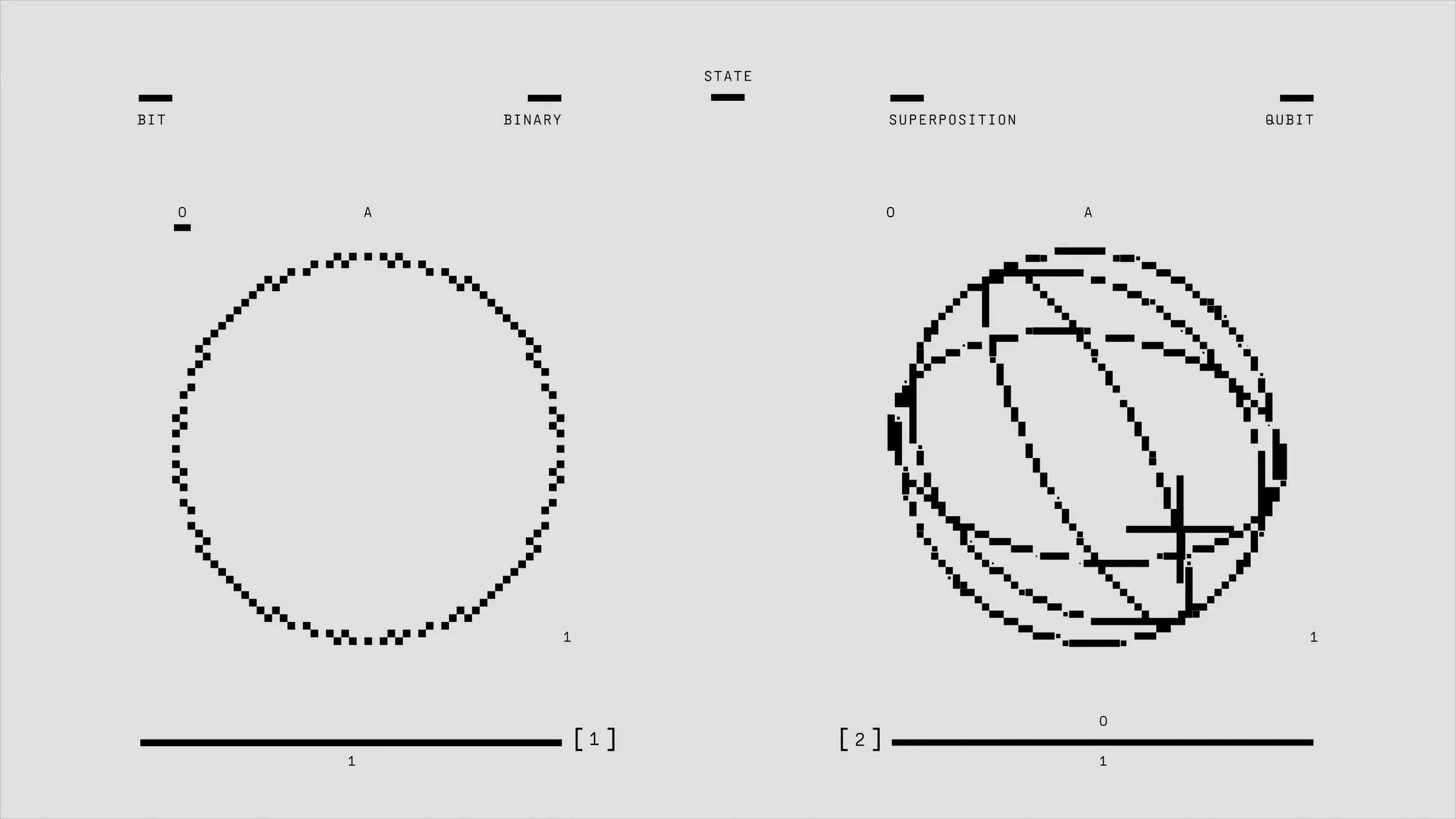
Quantum computing attracts more certainty than the evidence currently supports, in both directions. We take optimisation and simulation workloads apart, identify the sub-problems where quantum and quantum-inspired methods are genuinely worth testing, and say plainly where a classical solver still wins — which, today, is most of the time.
What we take on
Optimisation
QUBO, annealing and hybrid solvers
Simulation
Molecular, materials and flow workloads
Hybrid quantum-classical workflows
The right tool per sub-problem
Quantum-readiness consulting
Honest maturity mapping
Benchmarking & validation
Reproducible comparisons only
Our stance
Where this helps today — and where it does not
Worth doing now
- Formulating a combinatorial problem as QUBO and testing it honestly against your existing solver
- Simulator-based experimentation and team upskilling at small qubit counts, where the physics is teachable
- Deciding which parts of a pipeline are worth revisiting as hardware matures, so the work is ready when it does
- Reading vendor benchmarks critically before a procurement decision depends on them
Stays classical, for now
- Production optimisation at industrial scale — classical solvers remain the baseline to beat, and usually win
- Any workload where the quantum step cannot be reproduced on request
- Speedup claims. We publish a method and a baseline, or we publish nothing.
- Qubit counts as a proxy for capability. The number is not the capability.
Related products
[ Optimisation product ]
One consolidated optimisation offering, replacing three overlapping names.
[ Simulator SDK ]
Open-source circuit simulator. One canonical definition, matching the repository.

[ QUBO Solver SDK ]
QUBO formulation and solving, with documented problem classes.

Quantum Playground
Browser simulator — up to 20 qubits, Qiskit / Cirq / Python.
Fluid-simulation methods
Hybrid quantum-classical exploration for flow and turbulence workloads.
Related research
Quantum-Accelerated Climate Forecasting
Climate models trade resolution against ensemble size, and decision-makers usually need what the budget cannot give: many detailed scenarios rather than one. We are looking at whether the sampling step alone can be restructured, leaving the physics to the classical models that already handle it well. No classical baseline has been run yet, which is why this sits as a concept.
Quantum-Powered Carbon Capture Modeling
Molecular adsorption and sequestration modelling; MOF screening, reaction pathways and AI-assisted process optimisation.
High-Entropy Alloys for Aerospace
Simulation of alloy composition, phase stability, defects and aerospace material performance.
Programmable Matter & Smart Polymers
Molecular self-assembly, phase transitions and stimuli-responsive polymer design.
Quantum-Encrypted Materials Databases
Consortium members want to pool materials data without exposing their own pipeline, and trust-plus-a-contract does not scale across parties who are collaborators and competitors at once. We are looking at quantum-resistant schemes for confidentiality that has to outlast current cryptography. Stated plainly: most of this is a governance problem wearing a cryptography costume, and we would want to argue the answer is boring standard cryptography before agreeing that it is not.
Quantum Simulations for Molecular Design
Electronic-structure and molecular-interaction simulation for candidate design and screening.